


Choosing what to send is often harder than choosing the flowers themselves. A hand-tied bouquet and a vase arrangement can be built from exactly the same stems and cost roughly the same, yet they arrive as very different gifts. One asks the recipient to do a little work; the other is ready to sit on the windowsill the moment it's unwrapped. Neither is better in every situation — but each is clearly better in some.
The practical difference
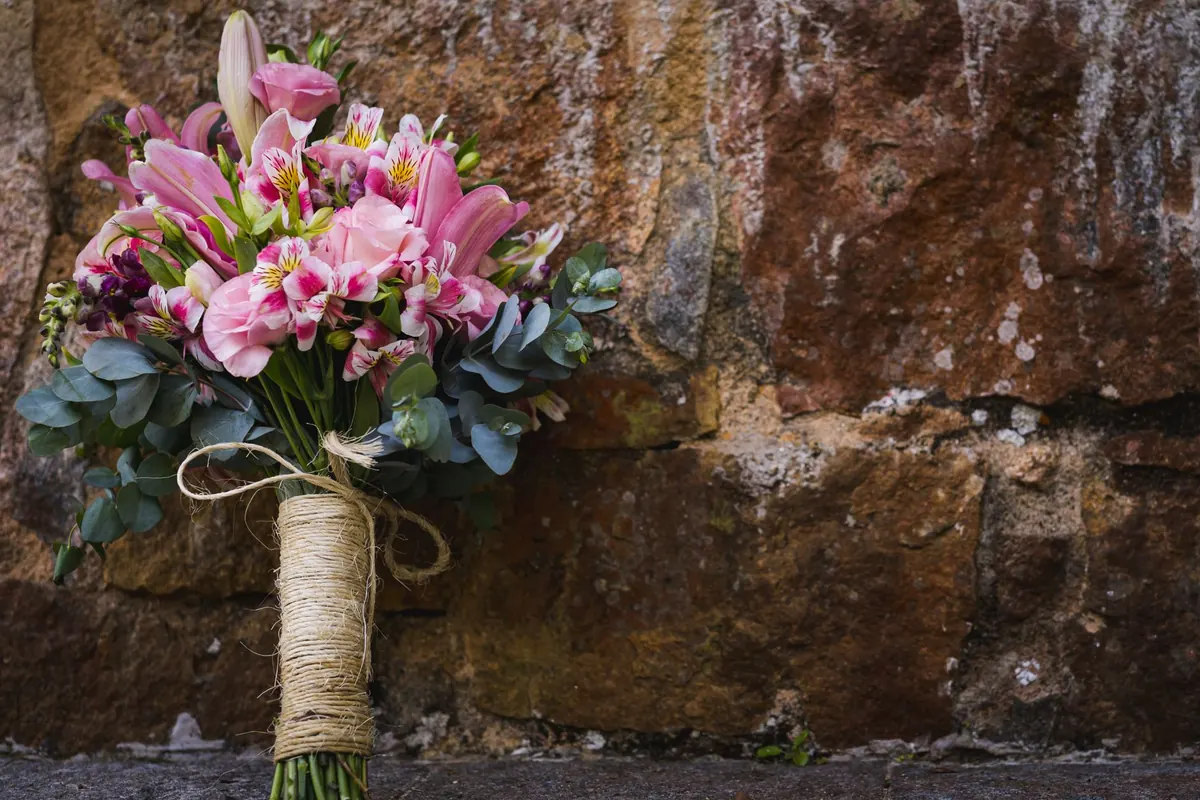
A hand-tied bouquet is arranged in the hand, stem by stem, usually in a spiral so the flower heads sit evenly on every side. The florist ties the stems with twine, wraps the whole thing in paper or cellophane, and sends it out with a water source — either a small aqua pack at the base or a damp wrap around the stems. The recipient unwraps it, trims the ends and stands it in their own vase.
A vase arrangement is finished for them. The stems go straight into the container the flowers will live in, often held in place with floral foam or a grid of tape and foliage. It leaves the shop complete, and in most cases the recipient's only job is to top up the water.
That single difference — who does the last ten minutes of work — shapes everything else: the look, the cost, the delivery options and the way the gift lands.
Presentation and the moment it arrives
If you want the doorstep moment, a vase arrangement is hard to beat. There's no fiddling, no hunting for a vase that's the right height, no guilt about the ones still sitting dirty in the sink. It looks composed from the first second, which matters when the flowers are being handed over in front of colleagues, on a ward, or during a difficult visit.
Hand-tied bouquets win on generosity. A well-made one looks gathered rather than placed, and the untying of ribbon and peeling back of paper is part of the pleasure. There's also a practical advantage: the recipient chooses a vase that suits their room, whether that's a squat jug on a kitchen windowsill or a tall glass cylinder in a hallway. A vase arrangement arrives in the florist's taste; a hand-tied arrives in yours and theirs combined.
Care and how long they last
Hand-tied bouquets generally last longer, provided the recipient does the basics. Floral foam holds water but hides it — the surface can look damp while the block has dried out lower down. Once stems set in foam start to flag, there is very little you can do; they can't easily be re-cut or rearranged. With a hand-tied bouquet, you can re-trim, refresh the water and pull out fading stems as the week goes on, which keeps the arrangement looking full for longer.
Looking after a hand-tied bouquet
- Unwrap it fully, including any elastic bands or ties hidden below the twine.
- Cut 2–3cm off each stem at an angle with a sharp knife or florist's scissors — a clean cut, never a crush.
- Strip any leaves that would sit below the waterline. They rot and cloud the water within a day or two.
- Use a clean vase, fill it with lukewarm water and stir in the flower food sachet that came with the bouquet.
- Change the water every day or two and re-cut the stems every few days.
- Keep the vase away from direct sun, radiators, draughts and bowls of ripening fruit, which give off a gas that speeds up ageing.
Delivery and getting them there in one piece
Vase arrangements are heavy, bulky and top-heavy. Water sloshes in transit, stems shift, and a cracked or chipped vase ends the gift before it begins. Couriers charge more for the weight and the awkward shape, and many florists restrict vase deliveries to their local area for exactly that reason.
Hand-tied bouquets are lighter, more compact and easier to box, so they travel well over longer distances. The one thing to check is water: ask whether the bouquet is sent with an aqua pack or a damp wrap, particularly for overnight or next-day delivery.
There's also the question of where the flowers are going. Hospital wards, care homes, offices, hotel rooms and serviced apartments often have no vase and nowhere sensible to arrange loose stems. Some clinical areas restrict flowers altogether, so it's worth checking the venue's policy before you order. In those settings, a vase arrangement is usually the safer, kinder choice.
Which suits which occasion
- New baby or a hospital stay: vase arrangement — but confirm first, as some wards ask for no flowers at all.
- Sympathy and funerals: vase arrangement, or follow the funeral director's guidance. A grieving family shouldn't have to hunt for a vase and a pair of scissors.
- Birthdays and thank-yous for someone with a cupboard full of vases: hand-tied.
- Anniversaries and Valentine's Day: hand-tied roses are the classic; choose a vase arrangement if you want it to be completely effortless.
- Housewarmings and new homes: vase arrangement — the container becomes part of the gift.
- Office and corporate thank-yous: vase arrangement, timed for a day someone is actually in.
- Get well soon: vase arrangement. Someone recovering doesn't want to be trimming stems.
- Anyone whose home you've never seen: vase arrangement.
Cost, vases and what to ask
A hand-tied bouquet usually gives you more stems for the same money, because you're not paying for a container. A vase arrangement costs more but includes something that stays after the flowers have gone. Both are priced by season, stem count and variety, so compare like for like rather than by total spend alone. Before ordering, it's worth asking:
- How many stems are included, and which varieties are in season?
- Is the vase included in the price, or is it returnable?
- How will the flowers be kept watered in transit?
- Can you deliver on a specific day, and will the recipient be in?
- If nobody answers the door, where will the flowers be left?
A simple way to decide
If the recipient has vases and enjoys having flowers in the house, send a hand-tied bouquet. It travels better, offers more blooms for your budget and feels more generous when it's unwrapped. If they're in a hospital, care home, office, hotel or a brand-new home without vases — or if you simply want them to do nothing at all — send a vase arrangement.
When you're unsure, ask the florist. A good one will know which option survives the journey to that particular address on that particular day, and will tell you honestly if the answer isn't the one you had in mind. If the flowers are heading to a hospital, care home or workplace, check their policy on deliveries first. It takes a minute and saves a wasted journey.
Photo: Bruno Mattos / Pexels