




A bouquet that collapses within three days is rarely bad luck. More often it is the result of a few small habits picked up by accident: leaves left under the waterline, a vase sitting on a sunny windowsill, a stem that never gets re-cut. None of these are difficult to put right, and most take seconds. Here are the five mistakes that do the most damage to cut flowers, and what to do instead.
1. Leaves Left Below the Waterline
This is the single most common reason a bouquet goes limp before its time. Foliage submerged in the vase begins to rot within a day or two. The water turns cloudy, bacteria multiply, and the stems' drinking channels become blocked by the muck. The flowers are still losing moisture through their petals, but they can no longer take any up. Drooping heads follow, and no amount of fresh water will rescue stems that have already sealed over.
The fix is simple and takes about a minute. Before the bouquet goes anywhere near the vase, hold each stem against the outside of the vessel and note where the waterline will fall. Strip every leaf that would sit below it.
How to strip stems neatly
- Work over a bin or a sheet of newspaper, holding each stem upside down so the leaves fall away from the bunch.
- Start at the bottom and move upwards, stopping a good two or three centimetres above the estimated waterline.
- Snip leaves off with sharp scissors or floral snips rather than pulling them downwards. Pulling tears a strip of the stem's outer skin, which is exactly where the flower needs to draw water.
- Check again after you have arranged the flowers. If you have trimmed the stems shorter to fit the vase, the waterline has moved and more leaves may need to come off.
2. Placing Flowers in Direct Sun
It feels logical to give flowers the brightest spot in the house, but a sunny windowsill is one of the worst places for a cut bouquet. Cut flowers have no roots to replace the water they lose, and direct sun and warm air speed up that loss considerably. Glass vases make it worse: the water warms quickly and bacteria breed faster in it.
Radiators, wood-burning stoves, agas, televisions and appliances that run warm have the same effect. So do draughty hallways, where moving air dries petals. Aim for a spot with plenty of soft, indirect daylight and a steady, coolish temperature. If the room gets very warm during the day, moving the vase to a cooler room overnight genuinely helps, particularly with spring flowers such as tulips, narcissi and ranunculus.
3. Skipping the First Cut — and Never Re-cutting
A stem that has been out of water for more than a few minutes begins to seal at the base as air is drawn up into it. That seal is small, but it is enough to slow the flow of water. If the bouquet travelled home in the car and sat on the kitchen table while you found a vase, the first job is a fresh cut.
Use sharp, clean secateurs or a sharp knife — blunt scissors crush the stem and close the very channels you are trying to open. Take two or three centimetres off the bottom at a 45-degree angle. The slant exposes more surface area to the water and stops the stem sitting flat against the base of the vase. If you can make the cut while the stem end is submerged, so much the better, as it prevents air being drawn in. Then get the stems into water straight away.
Some stems need slightly different treatment. Woody stems, such as lilac, benefit from a short vertical slit up the base or a gentle crush with a rolling pin. Hollow or sappy stems, including dahlias and poppies, do better with a clean angled cut and a change of water the next day, as they cloud it quickly.
Re-cutting is not a one-off. Every two or three days, take another centimetre or two off each stem and refresh the water. This single habit often adds several days to a bouquet.
4. A Grubby Vase and Water Left Too Long
Even a vase that looks clean can carry a film of bacteria around the inside. Left alone, that film seeds the fresh water the moment you fill it. Water that is never changed becomes a soup of decaying plant matter, and the smell is a reliable sign that the stems are struggling.
A quick vase routine
- Wash the vase in hot, soapy water, using a bottle brush to reach the sides and base, then rinse thoroughly. A dishwasher is fine if the vase is dishwasher-safe.
- Change the water every two days, or daily in warm weather, and top it up in between so the stems never sit above the waterline.
- Add flower food at the dilution on the sachet. It contains a sugar to feed the blooms, an acidifier to keep the water clear and a small amount of biocide to slow bacterial growth.
- Remove fading blooms and fallen leaves as you go. Dead plant material in the water shortens the life of everything else in the vase.
- Be wary of kitchen-cupboard remedies. Bleach, vinegar, aspirin and lemonade are often recommended, but the ratios vary wildly and the wrong dose damages stems. A proper sachet is more reliable.
5. Parking the Bouquet Next to the Fruit Bowl
Ripening fruit releases ethylene, a natural plant hormone that triggers ageing. A bowl of bananas or a ripening avocado within a metre of your flowers will quietly shorten their life, and flowers are often sensitive to concentrations far too low for us to notice. Carnations, lilies, gypsophila, sweet peas and delphiniums are among the quickest to react.
Move the fruit bowl to another room or the far end of the kitchen. The same applies to cigarette smoke and exhaust fumes, so a vase beside an open window on a busy road is not the bargain it looks like. If you keep a bowl of fruit on the table, make it the flowers that take the other side of the room.
A Five-Minute Routine That Keeps Bouquets Going
None of this needs to be a chore. Build the following into the day you bring flowers home and then into a quick twice-weekly check, and you will get noticeably more from every bunch.
- Unwrap the bouquet, strip the lower leaves and give every stem a fresh angled cut.
- Wash the vase properly, then fill it with cool water and the correct dose of flower food.
- Arrange the flowers in a spot with indirect light, away from radiators, draughts and fruit.
- Every two or three days, re-cut the stems, change the water and pull out anything that has faded.
Do those four things and the difference is obvious by the end of the week: heads still upright, petals still firm, water still clear. Flowers are perishable, but they are not as fragile as they look. Most of what shortens their life is in our hands, and most of the remedy takes less time than making a cup of tea.
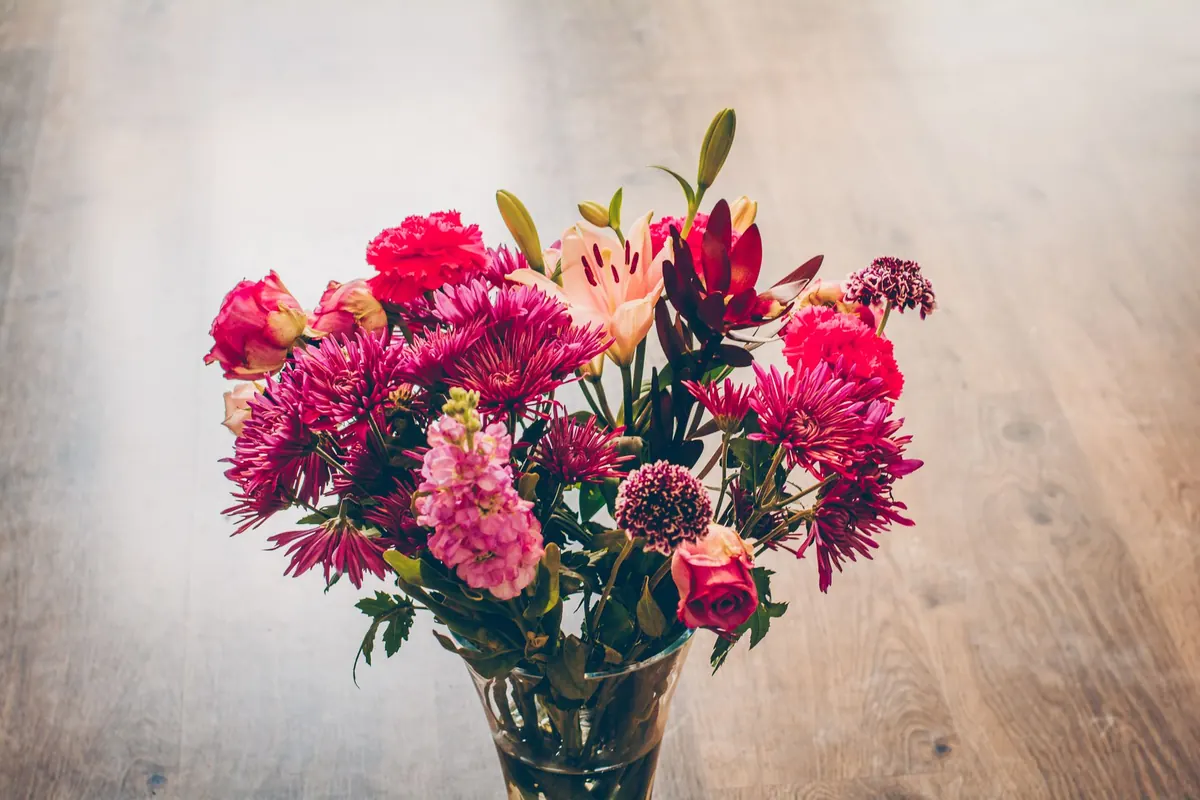
Photo: Annette Bauer / Pexels